Call Us Toll Free - US & Canada : +1-(888) 602-0119

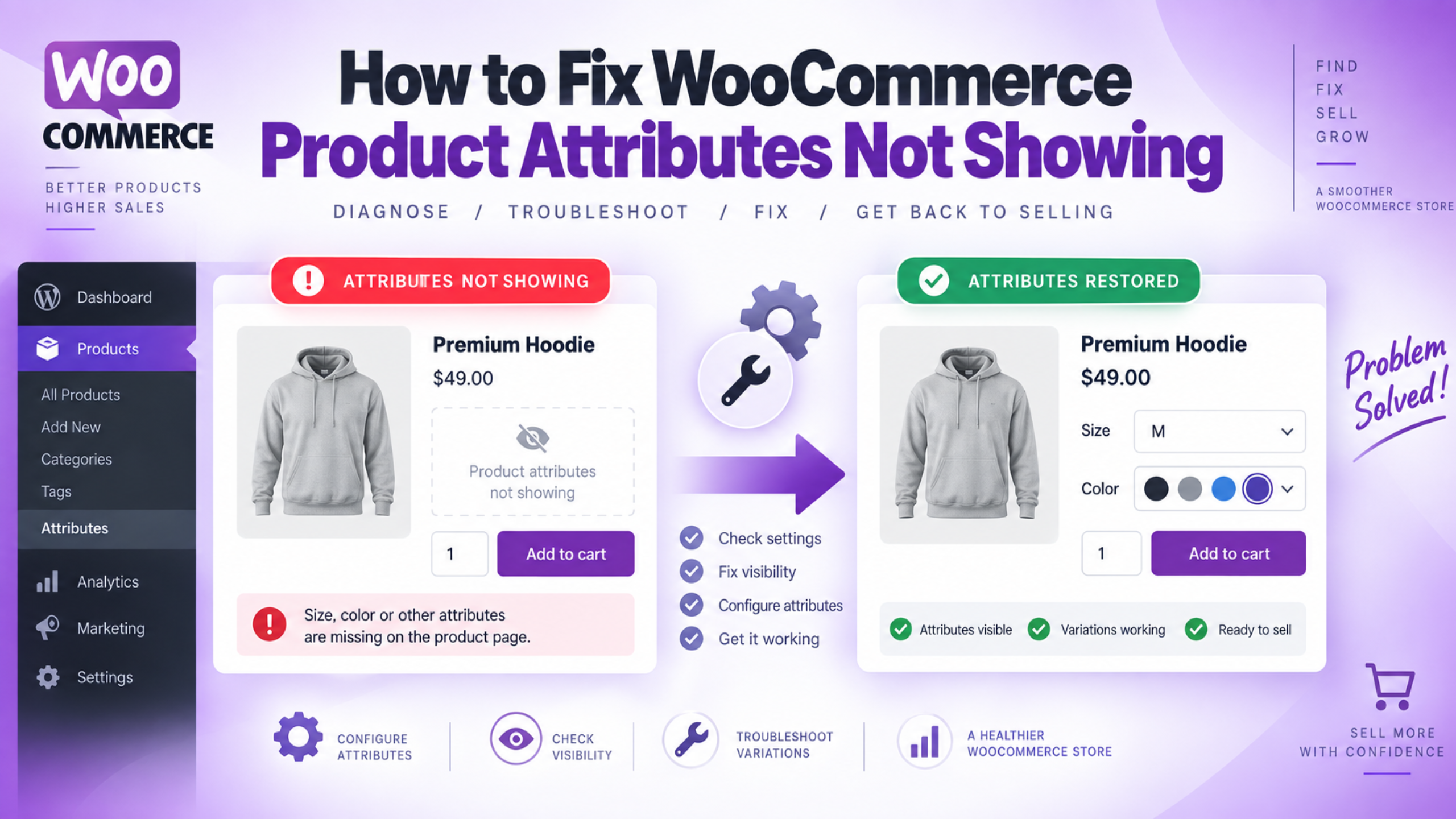
How to Fix WooCommerce Product Attributes Not Showing (2026 Guide)

Introduction

WooCommerce attributes help customers understand products before making purchase decisions. They can describe size, color, material, style, capacity, or other features. These details also help shoppers compare similar products more easily. However, store owners sometimes find WooCommerce product attributes not showing correctly. The attributes may exist inside WordPress but disappear from customers. Sometimes, only certain values disappear from the product page. Other stores may notice that variation choices suddenly stop appearing. The problem can affect simple and variable products differently. Therefore, understanding how WooCommerce attributes work is important first. This makes later troubleshooting much easier and more accurate. If you manage a WooCommerce store regularly, reviewing reliable WooCommerce support resources can also help. They provide useful information about common store settings and problems.

What Are WooCommerce Product Attributes?

Product attributes describe specific features connected with a WooCommerce product. For example, a clothing store may create a Color attribute. The available values could include black, blue, white, and green. Another common attribute is Size, with several available product choices. Stores can also create attributes for material, model, pattern, or capacity. These details give customers useful information before they purchase products. Attributes can also help create variations for variable WooCommerce products. A shirt may have several colors and different available sizes. Each color and size combination can become a separate variation. When WooCommerce attributes are not showing, customers may lose these choices. They might see incomplete information or missing variation selection fields. This can make the product page harder to understand.

Types of WooCommerce Product Attributes

WooCommerce product attributes can serve different purposes across a store. Understanding each option helps you organize products correctly and prevents WooCommerce attributes not showing because of incorrect settings.

1. Global Product Attributes

Global attributes are created under Products > Attributes and reused across products. They work best for common details like color, size, material, style, or brand throughout your WooCommerce store.

2. Custom or Product-Level Attributes

Custom attributes are created directly inside an individual product. They only belong to that product and work well for unique specifications, measurements, materials, features, or other product-specific information.

3. Attributes Used for Variations

Existing global or custom attributes can be marked for variations. WooCommerce then uses values like Small, Medium, Blue, or Black to create selectable combinations for variable products.

4. Visible Product Attributes

Attributes can be marked as visible on product pages. When enabled, WooCommerce can display their values within product information areas, depending on the active theme or page builder design.

5. Filterable Product Attributes

Global attributes can help customers filter products by features like size or color. They make large catalogs easier to browse and allow shoppers to quickly find products matching their needs.

6. Attribute Archives

Global attributes can have archives enabled in WooCommerce. This creates archive pages for individual terms, allowing stores to display products sharing a particular attribute value, such as black products.

7. Select-Type Attributes

Select is the standard attribute type used by most WooCommerce stores. It organizes predefined attribute terms that administrators can assign to products and use within product variations or other features.

8. Color or Image Attributes

WooCommerce also supports an experimental color or image attribute type with supported block themes. When enabled, stores can represent suitable attribute choices using visual color or image swatches.

Common Signs of WooCommerce Attribute Problems

WooCommerce attribute problems can appear in several ways. Some issues affect product pages, while others affect variations or filters. Knowing the common signs helps store owners identify the problem faster and choose the correct troubleshooting method.

1. Attributes Missing from Product Pages

One common sign appears when product attributes exist in WooCommerce settings but do not appear on product pages. Customers may not see important details like size, color, material, or brand, which can make product information feel incomplete.

2. Variation Dropdowns Are Not Showing

Variable products normally display dropdowns for options such as size or color. If these dropdowns disappear, the product may have incorrect attribute settings, missing variations, disabled options, or incomplete product data that prevents customers from selecting choices.

3. Attribute Values Are Missing

Sometimes the attribute name appears, but its values remain missing. For example, Color may display without Black, Blue, or Red options. This issue often suggests missing terms, incorrect product assignments, or attribute data that was not saved properly.

4. Attributes Show in Admin but Not Frontend

Store owners may see attributes correctly inside the WordPress dashboard while customers cannot see them on the storefront. This usually points toward visibility settings, theme templates, page builders, custom code, caching, or other frontend display problems.

5. Additional Information Tab Is Empty

WooCommerce may show an Additional Information tab without useful attribute details. This can happen when attribute visibility is disabled, values are missing, or the active theme changes how product information is displayed within the single product layout.

6. Product Filters Do Not Show Attributes

Another warning appears when shop filters stop showing expected attribute options. Customers may no longer filter products by size, color, material, or other values. This can reduce product discovery and may indicate incorrect global attribute or taxonomy settings.

7. Some Product Attributes Suddenly Disappear

Store owners may notice that previously visible attributes suddenly disappear after updates or product changes. This can happen after theme updates, plugin changes, imports, caching issues, or WooCommerce updates that affect how product data is stored or displayed.

8. Attributes Are Not Working for Variations

Attributes may appear correctly but fail to create or control product variations. Customers might select options without receiving the correct variation. This can indicate incomplete variation settings, missing prices, disabled variations, or incorrectly assigned attribute terms.

9. Only Certain Products Have Missing Attributes

Sometimes the issue affects only selected products instead of the whole store. This usually suggests a product-level configuration problem, such as missing values, incorrect attribute assignments, unsaved settings, or inconsistent data imported from another WooCommerce store.

10. Attribute Changes Do Not Appear After Saving

You may update product attributes correctly, but the changes still do not appear. This can happen because of page caching, object caching, CDN cache, browser cache, or outdated product data that continues showing an older version.

Why Fixing Missing Product Attributes Is Important

Fixing missing product attributes is important for both customers and store owners. Product attributes explain key details like size, color, material, model, capacity, and style. When these details are missing, customers may not fully understand what they are buying. This problem becomes more serious with variable products. Customers need clear attribute options before choosing the right variation. If size or color choices are missing, they may leave the product page without completing the purchase. Missing attributes can also affect product filtering. Many WooCommerce stores use attributes to help users narrow product results. If those values are unavailable, customers may struggle to find suitable products quickly. Clear attributes also support better product organization. Store owners can manage variations, product data, and filters more easily when attributes are set correctly. This reduces confusion during future updates and product imports. Another reason to fix missing attributes is customer trust. Complete product information makes a store look more reliable and professional. Buyers feel more confident when important details are easy to find. For these reasons, resolving missing attributes should be treated as an important WooCommerce maintenance task. It improves product clarity, shopping experience, store management, and overall usability.

Causes of WooCommerce Product Attributes Not Showing

Several issues can cause WooCommerce product attributes not showing correctly. The problem may come from product settings, variations, themes, plugins, cache, or imported data. Understanding each cause helps store owners find the real issue before making changes.

1. Product Attribute Is Not Added Correctly

Sometimes an attribute exists in WooCommerce but is not assigned correctly. The product may therefore miss important values like color, size, or material. This is a common reason for WooCommerce product attributes missing on individual product pages.

2. Attribute Values Are Missing

An attribute needs valid values before WooCommerce can display useful information. For example, a Color attribute needs terms like Red or Blue. Missing terms can cause WooCommerce attributes not visible on the frontend.

3. Attribute Visibility Is Disabled

WooCommerce allows store owners to control attribute visibility. If the visibility option is disabled, the attribute may remain hidden from customers. This often causes WooCommerce attributes not showing on product page sections.

4. Attribute Is Not Used for Variations

Variable products need attributes enabled for variation use. If this option remains unchecked, WooCommerce cannot use those values correctly. Customers may then see missing size, color, style, or other variation choices.

5. Product Variations Are Missing

Attributes alone do not always create product variations. Required variation combinations must also exist inside Product Data. Missing combinations can make WooCommerce attributes not working properly when customers try selecting available product options.

6. Wrong Product Type Is Selected

Variation attributes work properly when the product uses Variable Product settings. If the product remains Simple, WooCommerce will not show variation controls. This can make WooCommerce product attributes not displaying as expected.

7. Variation Prices Are Missing

WooCommerce variations usually need valid pricing information before customers can purchase them. If prices are missing, certain variation choices may not work correctly, making attributes appear unavailable or incomplete on the product page.

8. Variations Are Disabled

Individual variations can be enabled or disabled inside WooCommerce. A disabled variation may disappear from available product choices. This can make customers believe that certain attribute values or combinations have been removed.

9. Variations Are Out of Stock

Stock settings can also affect variation availability. If a variation is unavailable, WooCommerce may prevent customers from selecting it. This can sometimes make certain attribute combinations appear missing or unavailable during product selection.

10. Global Attributes Are Configured Incorrectly

Global attributes depend on proper terms and assignments. Missing terms, incorrect values, or incomplete product assignments may cause WooCommerce attributes missing across several products rather than affecting only one product.

11. Custom Attributes Are Set Up Incorrectly

Custom product attributes are added directly to individual products. Incorrect values, missing entries, or unsaved changes can stop them from appearing. This issue usually affects selected products instead of the whole WooCommerce catalog.

12. Attribute Terms Are Missing

Global attributes require terms such as Small, Medium, Black, or Cotton. If these terms are deleted or never created, the related products may lose expected attribute values on frontend pages.

13. Attribute Slug Has a Problem

WooCommerce uses attribute slugs internally to identify attribute taxonomies. Incorrect or changed slugs may create problems with filters, imports, or custom code. This can sometimes lead to unexpected attribute display issues.

14. Theme Is Hiding Product Attributes

Some WordPress themes change WooCommerce product page templates. A theme may hide the Additional Information section or move attribute details elsewhere. This can cause WooCommerce product attributes not showing frontend correctly.

15. Page Builder Template Is Conflicting

Page builders can replace the normal WooCommerce product layout. If the template does not include the correct product information widgets, attributes may disappear even though they are still saved inside WooCommerce.

16. WooCommerce Template Files Are Outdated

Themes may contain custom WooCommerce template overrides. Older files can become incompatible after updates. This may explain why WooCommerce product attributes disappeared after updating WooCommerce, WordPress, or the active theme.

17. Plugin Conflict Is Affecting Attributes

Some plugins modify variation forms, product filters, or frontend scripts. A conflicting extension can stop attributes from loading correctly. This may affect only specific products or every variable product across the store.

18. Custom CSS Is Hiding Attributes

Custom CSS can accidentally hide product information. Rules using properties like display: none may prevent attribute sections from appearing. The data remains available, but customers cannot see it on the frontend.

19. JavaScript Errors Affect Variation Dropdowns

Variable product selectors depend on JavaScript for important actions. Script errors can prevent dropdowns from responding or loading correctly. This can make attribute options appear broken even when the WooCommerce settings are correct.

20. Cache Is Showing Old Product Data

WordPress cache, hosting cache, browser cache, or CDN cache may show older product pages. Recent attribute updates may therefore remain invisible until cached content is cleared and the latest version loads.

21. Product Import Mapped Attributes Incorrectly

CSV or third-party imports can map product attributes incorrectly. Global attributes may become custom attributes, or terms may be skipped. This often causes WooCommerce product attributes missing on recently imported products.

22. WooCommerce Database Needs Updating

WooCommerce sometimes requires database updates after major plugin changes. An outdated database can cause product data problems. Store owners may notice missing attributes, outdated values, or other unexpected product display issues.

23. Product Lookup Tables Are Outdated

WooCommerce uses lookup tables for product data and filtering. If these tables are outdated, attribute filters or product information may not update correctly. Regeneration may be needed after large product or catalog changes.

24. Theme or Plugin Update Caused Compatibility Issues

Updates can create compatibility problems with older themes or extensions. Attributes may work before an update but disappear afterward. This is especially common when custom WooCommerce templates or variation plugins are involved.

25. Attribute Data Was Not Saved Correctly

Store owners may add attributes but forget to save changes properly. Incomplete saves can leave old product data active. This can make new attribute values appear missing even though they were recently entered.

How to Fix WooCommerce Product Attributes Not Showing

When WooCommerce product attributes are not showing, start with product settings first. Do not change several settings at the same time. Follow each step and check the product page afterward. This approach helps you find the exact cause quickly.

Step 1: Check the Product Type

Go to Products > All Products in WordPress. Edit the product where attributes are missing. Scroll down to the Product Data section. Check the product type shown in the dropdown. Select Variable product when customers need selectable options. These options can include size, color, material, or style. If Simple Product is selected incorrectly, variation options cannot work properly. Update the product after changing its product type.

Step 2: Check the Product Attributes

Inside Product Data, open the Attributes section. Check whether the required attributes already exist. For global attributes, use the Add existing option. Select an attribute like Color or Size. Then select the required values for that product. For custom attributes, choose Add New. Enter the attribute name and required values. Separate custom values using the pipe | symbol. Click Save attributes after making changes. This step often fixes WooCommerce attributes missing from individual products.

Step 3: Enable Attribute Visibility

Edit the required attribute inside the Attributes section. Find the Visible on the product page setting. Enable this option when you want attribute details displayed. WooCommerce can then show them within Additional Information. Actual placement may depend on your active theme. Click Save attributes, then click Update on the product. Now refresh the product page in another browser tab. Check whether the WooCommerce attributes not showing on product page issue is resolved.

Step 4: Enable Attributes for Variations

This step applies when you use variable products. Open the attribute inside Product Data again. Enable Used for variations for the required attribute. For example, enable it for Size and Color. Then click Save attributes. Next, open the Variations section. WooCommerce should now allow those attributes when creating variations. If this option is not enabled, variation selectors may remain unavailable.

Step 5: Create or Regenerate Missing Variations

Go to Product Data > Variations. Check whether every required variation exists. Use Generate variations to create combinations from selected attributes. You can also add each variation manually when needed. For example, Size has Small and Large values. Color has Black and White values. Required combinations must exist as product variations. Save your variation changes before updating the product. If attributes were changed after variations were created, review variations again. Some combinations may need to be recreated.

Step 6: Check Price and Stock for Every Variation

Expand each variation and review its product information. Make sure every active variation has a valid price. WooCommerce can hide a variation when no price is entered. Also check whether each variation remains enabled. Review its stock status as well. Out-of-stock settings can affect which variation choices customers see. Add missing prices and correct stock information. Click Save changes, followed by Update. This step is important when WooCommerce attributes are not working inside dropdowns.

Step 7: Check Global Attribute Terms

Go to Products > Attributes from WordPress. Find the affected global attribute. Open Configure terms for that attribute. Confirm that all expected terms still exist. For example, the Color attribute may contain Black, White, and Blue. Add any missing terms before returning to the product. Then edit the product and assign those terms again. Save the attributes and update your product.

Step 8: Clear WooCommerce Temporary Data

Old cached data can make correct changes appear missing. First, clear your WordPress caching plugin and hosting cache. Then go to: WooCommerce > Status > Tools Find WooCommerce transients and clear temporary shop data when needed. Next, locate Product lookup tables and regenerate them. Afterward, clear your browser cache and reload the product page. This can help when WooCommerce product attributes disappeared after recent edits.

Step 9: Test for a Theme Conflict

Create a backup before performing conflict tests. A staging website is safer for live stores. Temporarily switch to a standard compatible WordPress theme. Then visit the affected product again. If attributes appear correctly, your original theme may be responsible. Check custom WooCommerce templates, theme settings, and product-page layouts. This is especially useful when WooCommerce product attributes are not showing frontend while remaining visible inside WordPress.

Step 10: Test for Plugin Conflicts

On a staging site, deactivate non-essential plugins temporarily. Keep WooCommerce active during your test. Reload the affected product page. If attributes return, reactivate plugins individually. Test the product after every activation. When the issue returns, the most recently activated plugin may be conflicting. Variation swatch, product filter, page builder, and optimization plugins deserve close attention. You can also review WP Customify for related WooCommerce troubleshooting guides when checking plugin, theme, or frontend problems.

Step 11: Check Browser Console Errors

Open the affected product page using Chrome. Right-click the page and choose Inspect. Open the Console tab and reload the product page. Look for red JavaScript error messages. Script errors can stop variation dropdowns from working correctly. They often come from themes, optimization tools, or third-party plugins. Record the error before making code changes. This helps identify the responsible script more accurately.

Step 12: Check Imported Product Attributes

If the problem started after a CSV import, review mapping settings. Check attribute names, values, visibility, and global attribute settings. WooCommerce’s importer includes fields for attribute values and visibility. Incorrect mapping can leave attributes incomplete after importing products. Compare one broken product with a working product. This makes missing attribute data easier to identify.

Step 13: Test the Product Page Again

Open the product page in a private browser window. Select every variation and check each attribute carefully. Also test mobile and desktop views when possible. Confirm that product details, variation dropdowns, and attribute values appear correctly. When trying to fix WooCommerce product attributes, follow these steps sequentially. Start with the product configuration before testing themes or plugins. This method makes troubleshooting WooCommerce product attributes not displaying safer and easier.

How to Prevent WooCommerce Product Attribute Problems

Preventing WooCommerce attribute issues is easier than fixing them later. Store owners should follow clear product setup, update, testing, and maintenance practices. These steps help keep attributes, variations, filters, and product pages working correctly.

1. Use Global Attributes for Common Options

Create global attributes for repeated values like size, color, material, or brand. This keeps product data consistent and reduces mistakes when the same attribute is used across many products.

2. Keep Attribute Names Consistent

Use the same naming style across your WooCommerce store. Avoid creating duplicate names like Color, Colours, or Product Color, because inconsistent labels can make product management harder.

3. Avoid Duplicate Attribute Terms

Check existing attribute terms before adding new ones. Duplicate terms can create confusion during product setup, filtering, imports, and variation management, especially when similar values already exist.

4. Configure Variations Carefully

Review every variation before publishing a variable product. Make sure attributes, prices, stock status, images, and other required details are added correctly for each available product combination.

5. Always Add Prices to Variations

Each active variation should have a valid price. Missing prices can stop certain variation choices from appearing correctly and may create confusing product selection problems for customers.

6. Check Attribute Visibility Settings

Enable attribute visibility when product details should appear on the frontend. This simple check can prevent WooCommerce attributes not showing on product page because of disabled display settings.

7. Keep WooCommerce Updated

Install stable WooCommerce updates regularly. Updates can include compatibility changes, bug fixes, and security improvements that help product attributes, variations, filters, and other store features work properly.

8. Update Themes and Plugins Regularly

Keep your active theme and WooCommerce-related plugins updated. Older software can create compatibility problems that may affect attributes, product layouts, variation selectors, or frontend display behavior.

9. Test Updates on a Staging Website

Use a staging site before applying major updates. Test product attributes, variations, filters, cart functions, and product pages there before making the same changes on your live store.

10. Clear Cache After Product Changes

Clear WordPress, hosting, browser, and CDN cache after important attribute changes. Cached pages may continue showing older product information even when the latest settings are already saved.

11. Review Imported Product Data Carefully

Check attribute mapping after CSV or third-party product imports. Confirm attribute names, values, terms, variation settings, and global attribute options before considering the import fully complete.

12. Avoid Unnecessary WooCommerce Plugins

Install only plugins your store actually needs. Too many extensions can increase conflict risks, especially when several plugins modify variations, swatches, product filters, or single product templates.

13. Check WooCommerce System Status

Review WooCommerce > Status regularly. Look for outdated templates, database warnings, version differences, or other notices that could later affect product attributes and related WooCommerce features.

14. Create Regular Website Backups

Keep recent backups of your database and website files. A reliable backup allows you to restore product data quickly if attributes disappear after updates, imports, or configuration changes.

15. Test Product Pages Regularly

Open several product pages after major store changes. Test attributes, variation dropdowns, filters, pricing, stock, and mobile display so small problems can be found before customers notice them.

Conclusion

WooCommerce product attributes play an important role in product details, variations, filters, and customer choices. When attributes disappear, the cause may involve visibility settings, missing terms, variation setup, cache, themes, plugins, or outdated product data. A step-by-step check can help identify the exact issue and restore missing information safely. Regular updates, backups, staging tests, and careful product setup can also prevent future problems. If WooCommerce product attributes still do not appear after troubleshooting, visit WP Customify for professional WooCommerce support or call +1-(888) 602-0119. Proper maintenance keeps product pages clear, accurate, and easier for customers to use while shopping online.
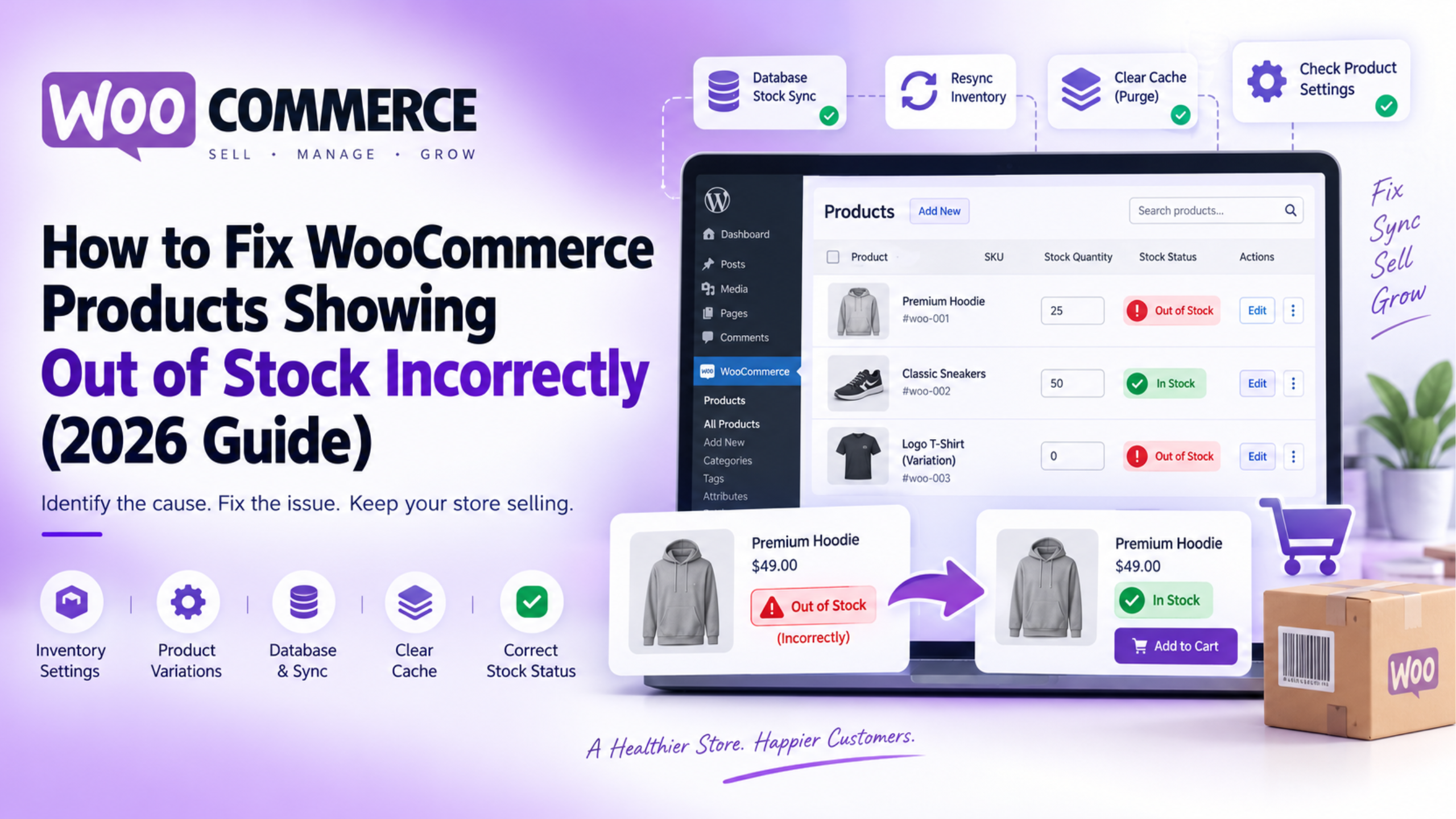
How to Fix WooCommerce Products Showing Out of Stock Incorrectly (2026 Guide)

What Is the WooCommerce Out of Stock Issue?

A common WooCommerce problem happens when a product has available inventory, but customers still see an out-of-stock message. This issue is often described as WooCommerce products showing out of stock when they are not. The physical inventory may be available in your warehouse, yet the website prevents customers from purchasing it. This creates a direct gap between your actual stock and WooCommerce product availability.

At first, the problem may look like a simple quantity error. However, WooCommerce uses several data points to decide whether a product can be purchased. It checks stock quantity, stock status, inventory settings, product variations, and stored product data. Caching and third-party inventory tools can also affect the final result shown to customers.

Because several systems work together, changing the quantity alone may not solve the issue. The first step is understanding how WooCommerce handles inventory behind the scenes. Once you understand that process, finding the incorrect data becomes much easier.

How WooCommerce Manages Product Inventory

WooCommerce mainly uses stock quantity and stock status for inventory management. These values are related, but they serve different purposes. Stock quantity shows how many units are currently available for sale. Stock status tells WooCommerce whether customers should be allowed to purchase that product.

For example, a product may have 40 units available in inventory. If the stock status is correctly set to “In stock,” customers can normally purchase it. However, if the status remains “Out of stock,” WooCommerce may still block purchases. This can happen even when the quantity field contains a positive number.

WooCommerce also includes the Manage stock setting. When this option is enabled, WooCommerce tracks product quantity automatically. Stock can decrease when orders are placed and increase after certain cancellations or restocking actions. When stock management is disabled, WooCommerce relies more heavily on the manually selected stock status.

This difference is important during troubleshooting. A store owner may enter 100 units into the quantity field and expect the product to become available. However, if stock management is disabled and the status remains unavailable, customers can still see an out-of-stock message.

Understanding WooCommerce Stock Data Behind the Scenes

WooCommerce stores most product inventory information inside the WordPress database. Several metadata values work together to control stock behavior. Important fields include _stock, _stock_status, and _manage_stock. These values help WooCommerce decide how the product should behave on the frontend.

The _stock field normally stores the available quantity. The _stock_status field stores values such as in stock, out of stock, or backorder. The _manage_stock setting tells WooCommerce whether quantity tracking should be handled automatically. When these values agree, product availability usually works correctly.

Problems begin when one value changes without the related values updating. For example, an import process may change the quantity from zero to 25. However, the stock status may remain set as out of stock. WooCommerce then has two pieces of inventory data describing different product conditions.

This type of mismatch may happen after product imports, bulk edits, custom code changes, or third-party inventory updates. Warehouse software and ERP systems can also create similar problems when synchronization fails. Understanding these database values helps explain why the product editor and customer-facing page can sometimes show different information.

How Product Lookup Data Affects Stock Display

WooCommerce also uses optimized lookup data to improve product catalogue performance. One important database table is commonly named wp_wc_product_meta_lookup. Your actual table prefix may be different, but the table serves the same purpose. WooCommerce uses this lookup data to retrieve common product information more efficiently.

This becomes important when shop pages behave differently from product pages. The product editor may show the correct stock quantity and status. The individual product page may also appear correct. However, the shop or category page can still show outdated availability when lookup information becomes unsynchronized.

This problem can appear after large imports, database migrations, bulk updates, or failed background processes. In these cases, changing the product quantity again may not fix the catalogue display. WooCommerce may need its product lookup information regenerated so all product data matches again.

If your shop page is missing several products completely, the issue may also involve catalogue visibility or product queries. Our guide on WooCommerce shop page not showing products explains other common reasons behind missing catalogue items.

How WooCommerce Decides Whether a Product Is Available

WooCommerce does not use one single check before showing product availability. It evaluates several conditions before deciding whether customers can purchase an item. These checks include stock management, available quantity, stock status, backorder settings, stock thresholds, and product type.

The process becomes more detailed for variable products. Each variation can have its own quantity and stock status. A parent product may appear available, while one particular size or color remains unavailable. WooCommerce checks the selected variation before allowing that customer to continue with the purchase.

For example, a shirt may have three sizes available. Small and medium may each have ten units remaining. Large may have zero units and an out-of-stock status. Customers choosing large will see an unavailable message, while other sizes remain purchasable.

If variation stock behaves incorrectly, checking only the parent product will not reveal the problem. Each variation must be reviewed separately. You can also read our guide about WooCommerce product variations not working for more variation-specific troubleshooting.

Why Finding the Root Cause Matters

When WooCommerce products showing out of stock when they are not becomes a problem, changing random settings can make troubleshooting harder. The incorrect information may come from product settings, database metadata, lookup data, caching, or an external inventory system. Each cause requires a different solution.

For example, increasing quantity will not solve an outdated cache problem. Regenerating lookup tables will not fix an external ERP system sending incorrect stock values. Clearing cache will also not correct a variation that genuinely has the wrong inventory setting. The solution must match the layer where the error begins.

A better approach is to understand how WooCommerce stores and reads inventory data first. Then compare the product editor, product page, shop page, and customer view. This structured process helps identify the problem faster and reduces the risk of changing healthy product data.

What Causes WooCommerce Products Showing Out of Stock Incorrectly?

When WooCommerce products showing out of stock when they are not happens, the reason is usually related to incorrect inventory data, configuration problems, or synchronization issues. WooCommerce depends on multiple settings and database values to determine whether customers can purchase a product. A small mismatch between these systems can create incorrect availability messages.

Finding the exact cause is important before making any changes. Many store owners immediately update product quantities when they notice an incorrect stock message. However, the real problem may exist somewhere else, such as product status, caching, database synchronization, or a third-party integration.

Understanding the common causes helps you identify the right solution faster. Each issue affects WooCommerce inventory differently, so the troubleshooting process should focus on finding where the incorrect information begins.

Incorrect WooCommerce Stock Threshold Settings

One of the most common reasons behind WooCommerce products showing out of stock incorrectly is an incorrect stock threshold setting. WooCommerce includes an inventory option that allows store owners to decide when products should be marked as unavailable.

Many store owners expect WooCommerce to mark a product as out of stock only when inventory reaches zero. However, the stock threshold value can change this behavior. If the threshold is set higher than zero, WooCommerce may consider a product unavailable while some inventory still exists.

For example, imagine a product has five units available. If the out-of-stock threshold is also set to five, WooCommerce may treat that product as unavailable. The product quantity is not empty, but the configured rule prevents further purchases.

This setting is useful for businesses that maintain safety stock. However, an incorrect threshold value can hide products that customers should still be able to purchase. Always review the inventory threshold before changing individual product settings.

Stock Management Is Disabled for Products

Another common cause is disabled product-level stock management. WooCommerce allows store owners to decide whether inventory should be tracked automatically or controlled manually.

When stock management is enabled, WooCommerce monitors product quantities and updates availability automatically. When customers purchase products, the available quantity decreases. When inventory is restored, WooCommerce can update the stock status again.

However, when stock management is disabled, WooCommerce does not use the quantity field in the same way. The manually selected stock status becomes more important. A product can have a quantity value but still appear unavailable if the stock status remains set incorrectly.

This problem often appears after bulk product updates, CSV imports, or migration processes. Some tools update inventory numbers but fail to update related stock settings. As a result, WooCommerce receives incomplete product information.

Variable Product and Variation Stock Problems

Variable products require extra attention because every variation can have its own inventory settings. WooCommerce does not only check the main product. It also checks the specific variation selected by the customer.

For example, a clothing product may include different sizes and colors. The parent product may show as available because some inventory exists. However, one specific variation may have zero stock and display an unavailable message.

Each variation stores separate information, including stock quantity, stock status, and backorder settings. A mistake in one variation can affect only that option while other variations continue working normally.

If you manage products with multiple options, review each variation individually. Issues with variations are often missed because store owners check only the main product settings. You can also read our detailed guide about WooCommerce product variations not working for more troubleshooting information.

Product Database Information Becomes Unsynchronized

WooCommerce stores product inventory information in different database locations. Normally, these values remain synchronized automatically. However, changes from external tools or custom processes can sometimes create mismatched inventory data.

For example, a product may have a quantity value showing 25 units. At the same time, the stock status value may still indicate that the product is unavailable. WooCommerce then receives conflicting information about the same product.

This problem can occur after website migrations, database updates, bulk imports, or custom development changes. It can also happen when a plugin modifies product data without updating all connected inventory fields.

Database synchronization problems are harder to identify because the product may look correct from the WordPress dashboard. However, the customer-facing website may still display the wrong availability status.

WooCommerce Cache Displays Old Product Information

Caching is another major reason behind incorrect product availability. WooCommerce stores often use different caching systems to improve website speed and performance.

These caching layers may include WordPress cache plugins, hosting cache, CDN cache, and object cache systems. While caching improves loading speed, it can also display older product information if updates are not refreshed correctly.

For example, you update a product from out of stock to available. The database now contains the correct information. However, customers may still see the previous cached version of the page.

This problem is common because administrators may see the updated version while visitors see cached content. Testing the website in private browsing mode helps identify whether caching is causing the problem.

Inventory Synchronization Plugin Errors

Many WooCommerce stores connect with external inventory systems. These connections help businesses manage products across different platforms. Examples include ERP systems, warehouse software, POS systems, and marketplace integrations.

These tools automatically send inventory updates to WooCommerce. However, incorrect settings or failed synchronization processes can update products with wrong stock information.

A product may be manually fixed inside WooCommerce but become unavailable again after the next synchronization process. This usually indicates that another system is overwriting the correct inventory data.

When this happens, checking the external integration logs is important. The source system sending incorrect data needs to be identified and corrected.

Plugin Conflicts and Custom Code Issues

WooCommerce allows plugins and custom code to modify product availability. While this flexibility is useful, it can also create unexpected stock behavior.

Some plugins control product visibility, purchasing rules, customer restrictions, or pricing conditions. These changes can affect whether WooCommerce considers a product available for purchase.

Examples include membership plugins, wholesale solutions, subscription extensions, and custom product rule systems. A plugin may hide the Add to Cart button even when inventory exists.

Custom code added to themes or plugins can create similar problems. Testing plugins carefully on a staging website helps identify whether another component is changing WooCommerce stock behavior.

Pending Orders and Temporary Stock Holds

WooCommerce can temporarily reserve inventory for unpaid orders. This feature helps prevent multiple customers from purchasing the same limited stock item.

When many customers start checkout but do not complete payment, available inventory may be temporarily reduced. For products with limited stock, this can create unexpected availability messages.

The reserved inventory is normally released after the configured hold period expires. However, incorrect settings or failed background tasks can affect this process.

Reviewing pending orders and stock settings can help identify whether temporary reservations are causing availability problems.

Understanding the Main Cause Before Fixing the Issue

There are many reasons behind WooCommerce products showing out of stock when they are not. The problem may come from simple settings or deeper technical issues involving databases and integrations.

The most effective approach is checking each possible layer carefully. Start with product settings, then review variations, database values, caching systems, and external connections.

Once the actual cause is identified, the correct fix becomes much easier. This prevents unnecessary changes and keeps your WooCommerce inventory system working correctly.

How to Identify WooCommerce Products Showing Out of Stock Incorrectly

Before applying any fix, you should identify where the problem begins. Many store owners change stock quantities immediately after seeing an error. However, WooCommerce products showing out of stock when they are not can happen for several different reasons. The problem may come from product settings, variation data, caching, database records, or an external stock system.

A structured diagnosis saves time and reduces unnecessary changes. Instead of changing multiple settings together, check each inventory layer separately. This makes it easier to find the exact source and apply the correct solution without affecting other products.

Check the Product Inventory Settings First

Start with the affected product inside the WordPress dashboard. Go to Products → All Products, then open the product for editing. In the Product Data section, select the Inventory tab and review the current settings carefully.

Check whether Manage stock is enabled and confirm the available quantity. Also review the stock status and backorder settings. These values should match your real inventory and your store’s stock policy.

For example, a product may show 40 available units while the stock status remains “Out of stock.” This is a clear sign that the stored quantity and product availability are not matching. If stock management is disabled, WooCommerce may depend mainly on the manual stock status instead.

After reviewing these fields, compare them with your actual warehouse or supplier inventory. This first check often reveals simple configuration errors before deeper troubleshooting becomes necessary.

Check the Global Out-of-Stock Threshold

The next step is checking the global inventory threshold. Go to WooCommerce → Settings → Products → Inventory and locate the Out Of Stock Threshold setting. This value tells WooCommerce when managed inventory should become unavailable.

Suppose a product has three units remaining and the threshold is set to three. The product may be treated as unavailable even though physical stock still exists. This can look like a stock error when the system is actually following the configured rule.

Compare the threshold with the affected product quantity before changing anything. Some businesses intentionally keep safety stock and should not use zero. The correct value depends on how your store handles limited inventory.

Compare the Product Page With Shop and Category Pages

Now compare how the product appears across different frontend locations. Open the individual product page first, then check the same item on your shop page and category archive. You should also check the site search results if the product appears there.

If all locations show the same incorrect status, the problem probably begins with product data. If the single product page is correct but the shop page is wrong, investigate lookup data or caching. This difference gives you an important clue about which layer is failing.

If several products are missing from catalogue pages, you may also have a wider visibility issue. Our guide on WooCommerce shop page not showing products covers related catalogue problems in more detail.

Test the Store as a Logged-Out Customer

Always test the affected product from a customer view. Logged-in administrators may bypass page caching and sometimes receive different content. This can make the product look correct while regular visitors still see old stock information.

Open a private browsing window and visit the product again. You can also use another browser or mobile device for comparison. Check the stock message, Add to Cart button, variation options, and product visibility.

If the product works for administrators but fails for logged-out visitors, caching should become a major suspect. In that case, review plugin cache, hosting cache, CDN cache, and object cache before changing inventory data again.

Review Variable Product Inventory Separately

Variable products need a deeper check because each variation can store different stock information. Open the product editor and go to the Variations section. Expand the exact variation that customers report as unavailable.

Check its stock quantity, stock status, Manage stock option, and backorder setting. Also confirm that the variation itself is enabled. A parent product can appear healthy while one child variation contains incorrect data.

For example, medium and large sizes may have available stock. However, the small size may still have an out-of-stock status after restocking. Customers choosing that variation will see an unavailable message even when other options work.

For deeper variation troubleshooting, read our guide on WooCommerce product variations not working.

Review WooCommerce System Status and Logs

WooCommerce includes built-in diagnostic tools that can reveal hidden problems. Go to WooCommerce → Status and review the System Status information. Look for database warnings, failed updates, outdated templates, server problems, or extension conflicts.

Next, open WooCommerce → Status → Logs and review recent log files. Look for errors related to imports, stock synchronization, REST API calls, background tasks, or inventory plugins. Pay close attention to timestamps near the moment the product became unavailable.

If stock problems begin after a scheduled import or sync task, the logs may help identify the source. This is especially useful when products become incorrect again after you manually fix them.

Check Scheduled Actions and Background Tasks

WooCommerce and many extensions use scheduled actions for background processing. Inventory synchronization tools can also use these tasks to update stock automatically. A failed or repeated action may create incorrect product availability.

Review scheduled actions from the WooCommerce status area when available. Look for failed tasks, repeated stock updates, delayed imports, or actions connected with inventory plugins. A recurring task can explain why the same product keeps returning to an out-of-stock state.

Do not simply delete failed actions without knowing their purpose. First identify which extension created them and why they are failing. This helps prevent the issue from returning after the next scheduled run.

Inspect WooCommerce Database Stock Values

Advanced users can inspect product stock values directly inside the database. WooCommerce product inventory commonly uses metadata such as _stock, _stock_status, and _manage_stock. These values should represent the same product condition.

For example, _stock may contain 25 while _stock_status still contains “outofstock.” This mismatch can explain why the product appears unavailable despite having quantity. It may also indicate an incomplete import, failed synchronization, or custom code problem.

Database inspection should mainly be used for diagnosis. Avoid changing values manually unless you understand WooCommerce data handling. Direct database edits can bypass related updates and create further synchronization problems.

Check External Inventory and Integration Logs

If your store uses ERP, POS, supplier, warehouse, or marketplace software, check those systems too. External platforms can update WooCommerce stock without manual input. A product may therefore look correct after your fix and become unavailable again later.

Review the integration logs and compare the last synchronization time. Check the stock quantity and status being sent to WooCommerce. If the external source contains wrong inventory information, fixing WooCommerce alone will only provide a temporary solution.

The source system must send correct stock data consistently. Otherwise, the next synchronization may overwrite your changes again.

Why Proper Diagnosis Makes the Fix Easier

Diagnosing WooCommerce products showing out of stock when they are not should follow a clear order. Start with product settings, then check thresholds, variations, customer views, logs, and external systems. Move into database checks only when simpler checks do not reveal the problem.

This approach helps you understand which WooCommerce layer contains incorrect information. Once you find that layer, you can apply a targeted fix instead of changing unrelated settings. That reduces troubleshooting time and protects healthy product data across your store.

How to Fix WooCommerce Products Showing Out of Stock Incorrectly

After identifying the reason behind the problem, the next step is applying the correct solution. Fixing WooCommerce products showing out of stock when they are not requires a careful approach because different causes need different solutions. A product setting problem cannot be fixed the same way as a database synchronization issue or a caching problem.

Before making any changes, create a complete website backup. For larger stores, it is better to test fixes on a staging website first. Inventory data directly affects customer purchases, so testing changes safely helps prevent additional problems.

The following solutions cover the most common causes and provide a structured way to restore correct product availability.

Correct the Product Stock Settings

The first solution is checking and correcting the product inventory settings. Open the affected product from the WordPress dashboard and go to the Inventory section. Review the stock quantity, stock status, Manage stock option, and backorder settings.

If the product has available inventory, make sure the stock status allows purchases. When stock management is enabled, WooCommerce should automatically control availability based on quantity changes.

For products with manual stock control, update the stock status manually. A product can contain inventory but remain unavailable if the status was not updated correctly.

After saving the changes, open the product page as a customer and verify that the Add to Cart button appears correctly.

Fix the WooCommerce Stock Threshold Setting

If the product settings look correct, review the global inventory threshold. Go to WooCommerce → Settings → Products → Inventory and check the Out Of Stock Threshold value.

This setting controls when WooCommerce considers a product unavailable. A high threshold value can make products appear out of stock before the actual inventory reaches zero.

For example, if a product has five units available and the threshold is also five, WooCommerce may treat the product as unavailable. Adjust this setting according to your business requirements.

Do not change the threshold without understanding your inventory process. Some stores intentionally use safety stock levels to avoid overselling.

Update Incorrect Product Stock Status

Sometimes the product quantity is correct, but the stored stock status is incorrect. This is one of the most common reasons behind WooCommerce products showing out of stock when they are not.

Open the product editor and check the stock status field. If the product is available, update the status to the correct option and save the changes.

For a small number of products, manual updates are usually enough. However, stores with hundreds of affected products should investigate why the status became incorrect before making bulk changes.

Bulk updates can quickly change many products, but they should always be tested carefully. Incorrect bulk changes can affect your entire catalogue.

Repair Variable Product Inventory

Variable products require separate inventory checks because each variation can contain different stock information. Updating the main product does not always update individual variations.

Open the product editor and select the Variations section. Review each variation and confirm the quantity, stock status, and Manage stock settings.

For example, a product may have available stock in medium and large sizes. However, the small size may still contain an incorrect out-of-stock status.

Correcting the affected variation usually resolves the issue. If you manage many variable products, regular variation checks can prevent repeated availability problems.

For additional troubleshooting, you can read our guide on WooCommerce product variations not working

Regenerate WooCommerce Product Lookup Tables

WooCommerce uses lookup tables to improve product query performance. These tables help shop pages and product listings load information faster.

Sometimes product information changes correctly, but lookup data does not update immediately. This can create a situation where the product page works properly, but shop pages still show incorrect availability.

To repair this issue, go to:

WooCommerce → Status → Tools

Find the product lookup table regeneration option and run the process. This rebuilds the stored product information and helps WooCommerce synchronize catalogue data.

After regeneration, clear your website cache and test the product again. This step is especially useful when individual product pages and catalogue pages show different stock information.

Clear WooCommerce Cache and Transient Data

Caching problems can make corrected products appear unavailable. After changing inventory information, clear all relevant cache layers.

Check your WordPress caching plugin, hosting cache, CDN cache, and object cache if your website uses one. Each layer can store previous product information.

WooCommerce also stores temporary data called transients. These temporary records help improve performance but may sometimes contain outdated information.

Clear WooCommerce transients from the WooCommerce tools section. Then test the product from a private browser window to confirm customers see the updated version.

Check Inventory Synchronization Systems

Many WooCommerce stores use external inventory systems to manage stock. These systems automatically send product updates to WooCommerce.

Examples include ERP software, warehouse management systems, POS platforms, and marketplace connections.

If the product becomes unavailable again after fixing it, an external system may be overwriting the correct information. In this situation, WooCommerce may not be the source of the problem.

Review synchronization logs and check the last update received from the external system. The original inventory source must send correct stock data to prevent the problem from returning.

Resolve Plugin and Theme Conflicts

Plugins and themes can change how WooCommerce handles product availability. Some extensions add custom rules that affect whether customers can purchase products.

Common examples include membership plugins, wholesale systems, subscription extensions, and product restriction tools.

To test conflicts, create a staging copy first. Disable plugins one by one and check whether the stock issue disappears.

Also test the website using a default WooCommerce-compatible theme. If the problem disappears, custom theme code or a plugin may be affecting product availability.

For more WooCommerce troubleshooting guides, visit our WooCommerce error and solution articles

Review Database Stock Information Carefully

Advanced users can inspect database values when normal troubleshooting does not identify the issue. WooCommerce stores important inventory information through product metadata.

Important fields include _stock, _stock_status, and _manage_stock. These values should represent the same product condition.

For example, a product may have a quantity of 30 but contain an out-of-stock status. This indicates that the inventory data is not synchronized correctly.

Database inspection is useful for finding problems. However, direct database editing should be avoided unless you understand WooCommerce data relationships. Incorrect changes can create larger inventory problems.

Test the Complete Purchase Process

After applying fixes, test the complete customer journey. Do not check only the product page.

Review the product page, shop page, category page, Add to Cart button, cart page, and checkout process.

Also test the product while logged out. Customers may experience different results because of caching or account-based settings.

If you also experience checkout-related problems, our guide on testing WooCommerce checkout and payments

can help you verify the complete purchase flow.

Verify the Fix Before Returning to Normal Operations

Fixing WooCommerce products showing out of stock when they are not requires proper testing after every change. A product may appear corrected in the dashboard but still fail for customers.

Confirm that the product is visible, purchasable, and displays the correct availability status. For stores with large catalogues, monitor other products after applying major inventory changes.

A careful repair process restores accurate inventory information and helps prevent the same issue from affecting customers again.

How to Prevent WooCommerce Products Showing Out of Stock Incorrectly

Fixing WooCommerce products showing out of stock when they are not is important, but preventing the problem is even better. A well-maintained WooCommerce store reduces inventory errors and helps customers see accurate product availability.

Most stock issues happen because of incorrect settings, outdated data, failed updates, caching problems, or synchronization errors. A regular maintenance routine helps identify these problems before they affect customers.

A reliable inventory process does not only focus on product quantity. It also monitors stock settings, database accuracy, integrations, and website performance. These steps help keep WooCommerce inventory information consistent.

Maintain Correct WooCommerce Inventory Settings

The first prevention step is keeping WooCommerce inventory settings properly configured. Review important settings regularly and make sure they match your store requirements.

Check options such as stock management, out-of-stock threshold, backorder settings, and stock visibility preferences. These settings directly affect how WooCommerce displays product availability.

A small configuration change can impact hundreds of products. For example, increasing the stock threshold accidentally may cause available products to appear unavailable.

Keep a record of your inventory settings after configuration. This makes it easier to identify unexpected changes during future troubleshooting.

Perform Regular Product Inventory Reviews

Regular inventory checks help identify incorrect product statuses before customers report problems. Do not rely only on customer complaints to discover stock errors.

Review your product catalogue regularly and look for items marked unavailable unexpectedly. Compare WooCommerce stock information with your actual inventory records.

This process is especially important for stores with large product catalogues. Hundreds of products can be affected by a small synchronization or configuration problem.

A simple weekly inventory review can help detect issues early. Finding a problem quickly reduces the chance of losing potential sales.

Test Updates Before Applying Them on Live Stores

WooCommerce updates improve security, performance, and compatibility. However, updates can sometimes affect product behavior when plugins or themes are not fully compatible.

Always test major updates on a staging website before applying them to your live store. This allows you to check whether inventory functions continue working correctly.

After updates, test important ecommerce actions. Review product pages, stock status, variations, Add to Cart buttons, and checkout functionality.

If you want to verify your complete purchase process, you can also follow our guide on testing WooCommerce checkout and payments

Monitor Inventory Synchronization Systems

Many WooCommerce stores depend on external systems for inventory management. These connections save time but require regular monitoring.

ERP systems, warehouse platforms, POS tools, and marketplace integrations can update product information automatically. If these systems send incorrect data, WooCommerce availability can become inaccurate.

Check synchronization logs regularly and confirm that external systems update both quantity and stock status correctly.

A reliable synchronization process prevents repeated issues where products become unavailable after manual fixes.

Use Safe Product Import and Export Processes

Product imports are useful for managing large catalogues. However, incorrect import files can create widespread inventory problems.

Before importing products, review important fields such as SKU, stock quantity, stock status, and stock management settings. Incorrect values in these fields can affect many products at once.

Always test large imports on a staging website first. This allows you to confirm that product availability remains correct before updating your live store.

A controlled import process protects your catalogue and reduces unnecessary stock errors.

Configure Cache Systems Correctly

Caching improves website speed, but incorrect cache settings can create outdated product information. Ecommerce websites require careful cache management because inventory changes frequently.

Review your cache plugin, hosting cache, CDN settings, and object cache configuration. Make sure dynamic WooCommerce pages are handled correctly.

Important pages such as cart, checkout, and account pages should not serve outdated information. Product availability should refresh properly after stock updates.

After major inventory changes, clear cache and test the website from a customer perspective.

Keep WooCommerce, Plugins, and Themes Updated

Outdated software can create compatibility issues that affect product availability. WooCommerce works together with WordPress, themes, and many extensions.

Keep your WooCommerce installation, WordPress version, plugins, and themes updated. Before updating, check whether extensions support your current WooCommerce version.

Remove unused plugins because they can create unnecessary conflicts. A clean website environment makes troubleshooting easier and improves overall stability.

Monitor Stock Changes and Product Activity

Tracking inventory changes helps identify unexpected stock updates. When a product changes from available to unavailable, you should know what caused that change.

Useful information includes the product name, previous stock value, new stock value, user activity, and update source. This information makes troubleshooting much faster.

If an external integration changes product data incorrectly, activity records can help identify the responsible system.

Monitoring stock activity turns inventory problems into easier-to-track events instead of confusing errors.

Create Regular Website Backups

Inventory data is one of the most valuable parts of an online store. A backup strategy protects your products, orders, and customer information.

Create regular backups of your website files and database. Always create a fresh backup before major updates, imports, or troubleshooting changes.

If an inventory issue occurs after a change, a backup gives you a safe recovery option.

A reliable backup process provides confidence when managing WooCommerce stores.

Final Thoughts on WooCommerce Stock Availability Issues

WooCommerce products showing out of stock when they are not is usually caused by incorrect settings, outdated information, caching problems, or synchronization failures. Understanding how WooCommerce manages inventory makes these problems easier to solve.

The best approach is to maintain accurate product settings, monitor inventory changes, test updates safely, and review connected systems regularly. Prevention reduces the chance of customers seeing incorrect availability messages.

A healthy WooCommerce store requires more than keeping products in stock. It requires accurate communication between inventory data, website features, and customer-facing pages.

By following proper maintenance practices, you can keep product availability reliable and provide customers with a smoother shopping experience.

Need Help Troubleshooting WooCommerce Inventory Issues?

Inventory problems can become difficult when multiple systems are involved. Issues related to product data, database synchronization, caching, plugins, or integrations may require deeper technical investigation.

A proper WooCommerce troubleshooting process focuses on finding the real cause instead of applying temporary fixes. This helps protect your store data and prevents the same issue from returning.

For more WooCommerce troubleshooting resources, explore ourWooCommerce guides and technical solutions

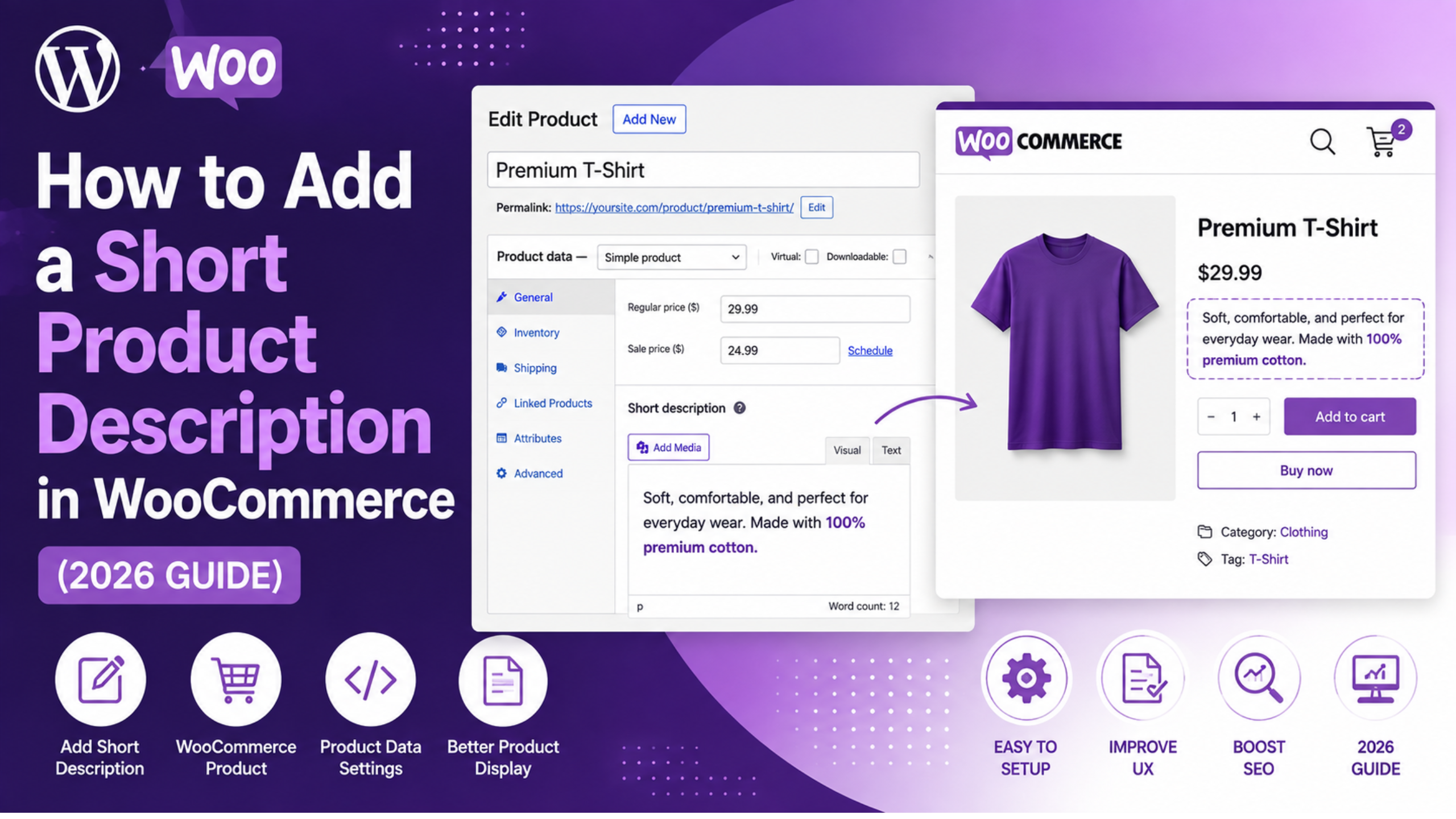
How to Add a Short Product Description in WooCommerce (2026 Guide)

Adding a short product description in WooCommerce takes thirty seconds once you know where the field is. Finding it is the hard part. It hides behind a checkbox on some sites. It moves to a new panel depending on which product editor you run. And on many stores it saves fine, then never shows up on the front end. Owners then hunt through theme settings for a problem that lives elsewhere.

This guide covers all three cases. Where the field lives in each editor. What to write in it. And how to find the exact reason yours is not showing.

First, Identify Which Product Editor Your Store Uses

Everything below turns on this one answer, so settle it first. WooCommerce ships two ways to edit a product. The short description sits in a different place in each.

Open any product for editing. Look at the top of the screen. Do you see a row of tabs marked General, Inventory, Shipping and Linked Products in a box titled “Product data”? That is the classic product editor. It is still the default on most stores.

You may instead see a side menu listing General, Organization, Pricing and Inventory as one long form. That is the newer product editor. It is opt-in. The switch lives under WooCommerce → Settings → Advanced → Features.

One more split matters. Your product template may be classic PHP, or built from blocks. Check Appearance in your admin menu. An Editor item instead of Customize means you run a block theme. Note the answer. It decides which fix below applies to you.

Adding a Short Description in the Classic Product Editor

Go to Products → All Products and open the product you want to edit. Scroll past the main text box and past the “Product data” box. Below both sits a panel titled Product short description, with its own small toolbar.

Type your text there and click Update. That is the whole job. The panel takes basic styling, so bold text, italics and bullet lists all work. Switch to the Text tab in the corner to paste or clean up HTML.

When the Short Description Panel Is Missing Entirely

This is the top reason people think WooCommerce has dropped the feature. It has not. The panel is a standard WordPress box, and those boxes are switched off per user. So a panel one admin can see may be hidden for the next admin on the same site.

Click Screen Options in the top right of the product edit screen. Find Product short description in the list and tick it. The panel shows up at once. The setting is stored against your own account. So a colleague who reports the field missing must tick it in their own login, not yours.

If the checkbox is not in Screen Options at all, something is removing the box. That is nearly always a page builder or a bulk product add-on that replaces the default edit screen. Turn off suspects one at a time. Check Screen Options after each.

Why the Field Is Sometimes Labelled “Excerpt”

Under the hood, this is not a special WooCommerce field at all. It is the standard WordPress post excerpt, stored in the post_excerpt column and simply renamed for products. That fact is worth holding on to, because it explains several odd quirks. Import and export tools often map the data to a column called “excerpt” instead. Custom code that changes excerpts will hit your product text too, whether the author meant it to or not. And any tool that claims excerpt support will work here with no changes at all.

Adding a Short Description in the New Product Editor

In the newer product editor the field sits in the General section. It is marked Summary, not “Short description”. You will find it just below the main Description area. It uses a block-style writing space with a small toolbar for bold, italic and links.

Two quirks here catch people out. First, this field is simpler than the classic panel by design. Complex HTML may be stripped on save. Keep products that rely on tables or custom markup in the classic editor. Second, text edited through the block screen does not always save. The field then reads as empty after a refresh. If your text vanishes, move that product back to the classic editor and use the Product short description panel. The data lands in the same column either way, so mixing the two costs you nothing. Check one saved product on the front end before you write the rest. You will catch this in a minute, not after fifty products.

What to Actually Write in a Short Description

The short description takes the most valuable space on your product page. It sits beside the image, above the fold, under the price and next to the buy button. It is the last text an unsure buyer reads before they decide. Treating it as a cut-down copy of the long text wastes that spot.

How Long It Should Be

Aim for two to four sentences, or 30 to 50 words. Most SEO tools flag text over 50 words as too long for this slot. Under about 150 characters looks thin beside a large product image. There is no hard limit in the code. But themes rarely hold more than a few lines of space. Anything longer pushes the buy button below the fold on a phone. That one result matters more than any word-count rule. So test a long version on a phone before you roll it out across the store.

A Structure That Converts

Open with what the product is and who it suits, in plain words. Follow with the one fact a buyer needs at this stage. That may be a size, a material, a capacity or a fit note. Close with the doubt that most often stops a sale. Often that is fit, delivery time, or whether the item works with what they own. Save the full spec table, care notes and tech detail for the long text below.

Write each one fresh. Copied text creates near-identical pages. This text also feeds marketplace listings, so the copying spreads well beyond your own site. For variants of one base product, change the opening line and the key fact, not just the colour name.

Diagnosing a Short Description That Will Not Display

You saved the text. It is still there after a refresh. The product page shows nothing. Before you change any settings, run this two-minute check. It tells you which of three causes you have.

Open the product page and view the page source in your browser. Search that source for a phrase from your text. Is the phrase in the HTML but not on screen? Then your theme’s CSS is hiding it, and you have a styling bug. Is the phrase missing from the source? Then the template never printed it. Skipping this check is why people spend an afternoon clearing caches for a CSS bug.

The Text Is Missing From the Page Source

On a classic PHP theme the text is printed by woocommerce_template_single_excerpt(). That function hangs off the woocommerce_single_product_summary hook at priority 20. It loads the template file single-product/short-description.php. Two things break that chain. A theme or child theme may have replaced the product template and dropped the call. Or a snippet may run remove_action on that hook, often left over from old custom work.

Switch to a default WordPress theme for a moment and reload the product. If the text appears, the override lives in your theme. If it still does not, the cause is code in a plugin or a snippets tool.

Block Themes and the Product Summary Confusion

Block themes drive a growing share of these reports. In a block-built product template, a block reads the post excerpt and prints it. That block may be set to build an excerpt from the long text on its own, and ignore what you wrote. Or it may cut the text at a fixed word count, mid-sentence.

Open Appearance → Editor and edit the single product template. Click the summary block. Check its settings for an excerpt-length or auto-build option. Set it to show your own text in full. If the block is missing, add it above the buy button.

Formatting Is Stripped but the Text Appears

Do your bullets and bold text print as one flat block? Then something is stripping the tags. The output runs through the woocommerce_short_description filter. SEO plugins and theme code both hook that filter to clean or shorten text. Either can strip markup you wanted to keep. Some block templates treat the excerpt as plain text as well, and drop tags by design. Test on a default theme with other plugins off to find the layer to blame. Then unhook it, or move that styling into the long text instead.

Adding Short Descriptions in Bulk

Editing several hundred products one by one is not real work. The built-in CSV importer is the route for a large store. Export from Products → All Products → Export, open the file, and fill in the Short description column. Import it back through Products → All Products → Import. Tick Update existing products on the import screen. Miss that box and you copy your whole store instead of updating it, which is slow to undo.

Map the column with care at the import step. If the tool leaves Short description unmapped, or ties it to the wrong field, your text lands in the long description and wipes what was there. Run a test import with five products first. Check the result on the front end before you load the full file.

Two warnings apply to any bulk run. Take a backup first, because the importer has no undo. And watch your row count on shared hosting. Large imports can time out part way and leave half the store updated.

Showing Short Descriptions on Shop and Category Pages

By default, WooCommerce prints this text on product pages only. Shop and category pages show the title, price and button. Many owners want a line of copy in the grid too. That helps most in stores where product names alone do not tell items apart.

On a block theme, edit the shop template in Appearance → Editor. Add an excerpt block inside the product template area. Then cap its length so the grid stays even. On a classic theme you hook the output onto an archive hook in your child theme’s functions file. Either way, keep the grid version short. Long text in a grid makes rows of uneven height. That ragged layout costs you more than the extra copy earns. Are products missing from those pages altogether? That is a separate issue, covered in our guide to fixing a WooCommerce shop page that is not showing products.

Mistakes That Quietly Cost You Sales

A few patterns show up again and again in store audits. Pasting maker copy is the worst one. That same text sits on every rival page stocking the item. Search engines then get no reason to pick yours. Repeating the product title wastes the slot, since the title sits right above it. Stuffing the keyword in three times reads badly to the only audience that counts. One natural mention is enough. The rest is noise a buyer has to read past.

Filling the field on some products and leaving it blank on others makes the layout uneven. The gaps read as a broken site, not a choice you made. Remember too that this text does nothing if the product itself is hidden. That is worth checking against our guide to hiding products in WooCommerce. And if the page will not load for buyers at all, start with our article on product pages you cannot view in WooCommerce.

Get Expert Help With Your WooCommerce Store

Short descriptions are small. But they sit at the exact point where a visitor decides to buy. A template fault that hides them across a whole store is easy to miss and costly to leave. The fix is rarely hard once you know which layer is at fault. Finding that layer is where most owners lose a day.

Maybe your text will not show on a block theme. Maybe a bulk import has scrambled your product data and you need it pulled back from a backup. Maybe your store just needs several hundred lines written well. Our WooCommerce team handles all three. We work on live stores without taking them offline. Visit WP Customify to talk to us about a one-off fix or ongoing support. Tell us what your product pages do now, and what you expected. We will name the layer at fault before you spend a thing. In most cases we can do that from your product URL alone.